Shri Badri Narayan ji Temple, Batseri
Also known as Badrinarain Temple, Batseri Badri Narayan Mandir
Shri Badri Narayan ji Temple in Batseri, Kinnaur, Himachal Pradesh, honors Vishnu as Badri Narayan and welcomes pilgrims on the Sangla-Chitkul road.
Photos of Shri Badri Narayan ji Temple, Batseri
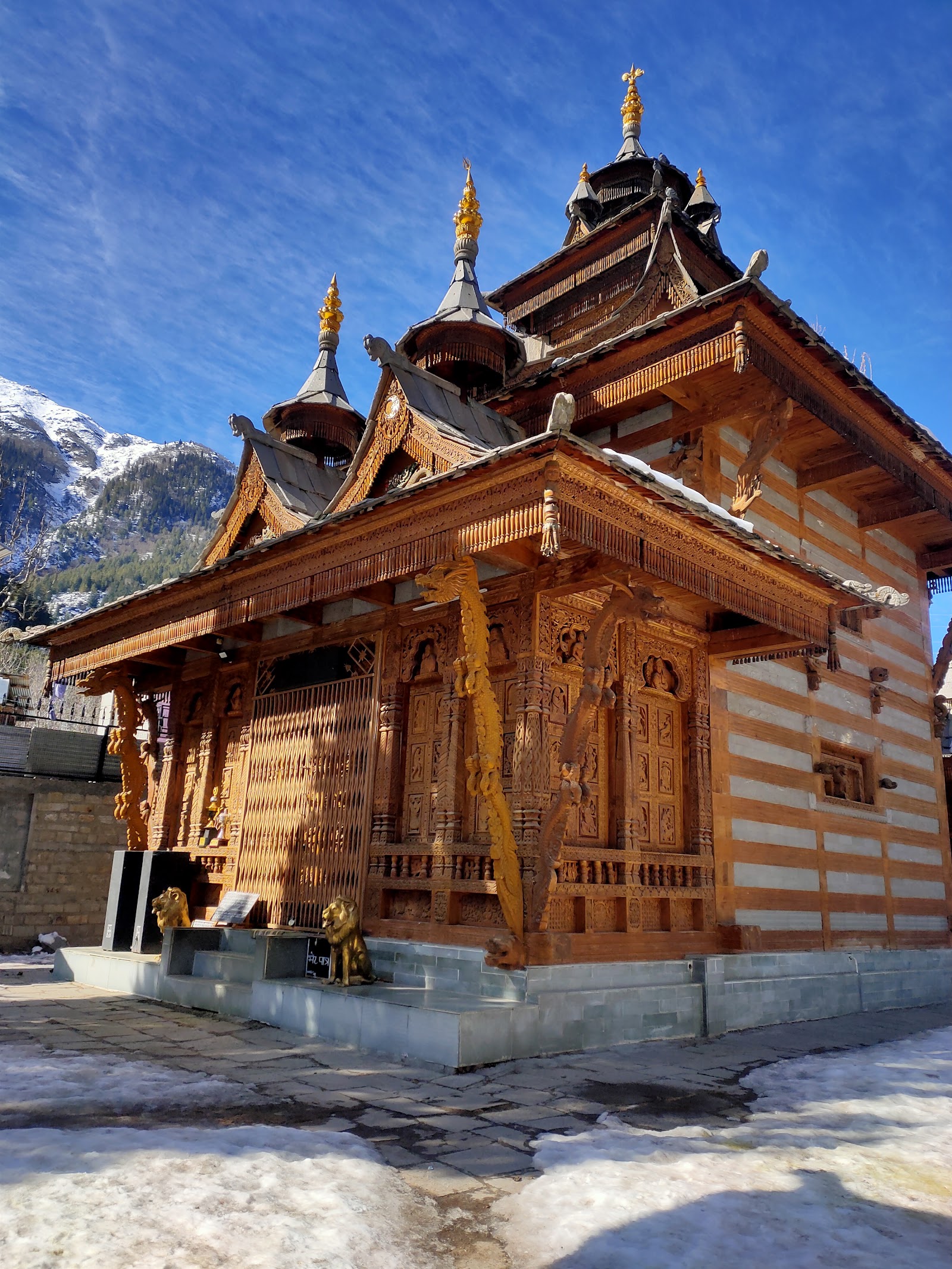
Shri Badri Narayan ji Temple, Batseri at a Glance
| Location | Kinnaur, Himachal Pradesh |
|---|---|
| Presiding deity | Vishnu |
| Established | Original shrine roughly 300 years old (destroyed by fire); present structure a comparatively modern rebuild |
| Architecture | Wood-built Kinnauri temple profusely decorated with carved motifs, blending Hindu and Buddhist decorative influences typical of the Baspa valley |
| Timings | Open daily, dawn to dusk |
| Address | Batseri, Himachal Pradesh 172106 |
History of Shri Badri Narayan ji Temple, Batseri
The original Badri Narayan shrine at Batseri stood for roughly three centuries before being entirely destroyed in a fire; the temple seen today is a modern rebuild in wood, continuing the village's dedication to Badri Narayan. Batseri village has a mixed Hindu-Buddhist population, including families who settled from Tibet roughly two centuries ago, and also maintains a roughly 250-year-old Buddhist monastery — illustrating the same composite religious culture found across Kinnaur's Baspa valley villages.
Festivals Celebrated at Shri Badri Narayan ji Temple, Batseri
- Fulaich
- Navratri
How to Reach Shri Badri Narayan ji Temple, Batseri
Nearest airport: Shimla, ~240 km, or Chandigarh. Nearest railhead: Shimla/Kalka. By road: NH-5 via Karcham to Sangla, then roughly 6-7 km to Batseri village on the Sangla-Chitkul road.
Temples Near Shri Badri Narayan ji Temple, Batseri
- Shree Bering Nag Ji Temple, SanglaHimachal Pradesh · about 4 km in a straight line
- Kamru Fort (Badri Vishal Temple)Himachal Pradesh · about 5 km in a straight line
- Rakcham TempleHimachal Pradesh · about 5 km in a straight line
- Shree Maheshwar Ji Temple, MebarHimachal Pradesh · about 11 km in a straight line
- Ram Temple, TanglingHimachal Pradesh · about 13 km in a straight line
- Mathi Temple, ChitkulHimachal Pradesh · about 14 km in a straight line
More Vishnu Temples to Visit
- Narayana Temple, RoghiHimachal Pradesh
- Shri Narayan Nagin Mata Temple, KalpaHimachal Pradesh
- Kuldev Narayan Ji Temple, PanwiHimachal Pradesh
- Laxmi Narayan TempleHimachal Pradesh
- Narsingh Temple, ChambaHimachal Pradesh
- Shri Hari Rai Temple, ChambaHimachal Pradesh
Frequently Asked Questions about Shri Badri Narayan ji Temple, Batseri
Where is Shri Badri Narayan ji Temple, Batseri located?
- Shri Badri Narayan ji Temple, Batseri is located at Batseri, Himachal Pradesh 172106, in Kinnaur, Himachal Pradesh, India.
Who is the presiding deity at Shri Badri Narayan ji Temple, Batseri?
- The presiding deity at Shri Badri Narayan ji Temple, Batseri is Vishnu (also known as Narayana, Hari), worshipped in the Vaishnava tradition.
What are the timings of Shri Badri Narayan ji Temple, Batseri?
- Shri Badri Narayan ji Temple, Batseri is generally open Open daily, dawn to dusk. Timings can vary on festival days and special occasions — verify with the temple before your visit.
When was Shri Badri Narayan ji Temple, Batseri built?
- Shri Badri Narayan ji Temple, Batseri was established Original shrine roughly 300 years old (destroyed by fire); present structure a comparatively modern rebuild. Portions of the structure have been added and renovated by successive dynasties over the centuries.
What is the architectural style of Shri Badri Narayan ji Temple, Batseri?
- Shri Badri Narayan ji Temple, Batseri is built in the Wood-built Kinnauri temple profusely decorated with carved motifs, blending Hindu and Buddhist decorative influences typical of the Baspa valley style, characteristic of Vishnu shrines of this region.
Which festivals are celebrated at Shri Badri Narayan ji Temple, Batseri?
- The principal festivals celebrated at Shri Badri Narayan ji Temple, Batseri include Fulaich, Navratri. These draw large crowds of pilgrims from across Himachal Pradesh and beyond.
How can I reach Shri Badri Narayan ji Temple, Batseri?
- Nearest airport: Shimla, ~240 km, or Chandigarh. Nearest railhead: Shimla/Kalka. By road: NH-5 via Karcham to Sangla, then roughly 6-7 km to Batseri village on the Sangla-Chitkul road.
Why is Shri Badri Narayan ji Temple, Batseri significant?
- Shri Badri Narayan ji Temple in Batseri, Kinnaur, Himachal Pradesh, honors Vishnu as Badri Narayan and welcomes pilgrims on the Sangla-Chitkul road.