Bijli Mahadev Temple
Also known as Bijli Mahadev, Bijli Mahadeva, Bijli Mahadev Mandir
Bijli Mahadev Temple, a mountaintop Shiva shrine in Kullu, is famed for its lightning-drawn trishul and the ritual re-fusing of its shattered lingam.
Photos of Bijli Mahadev Temple
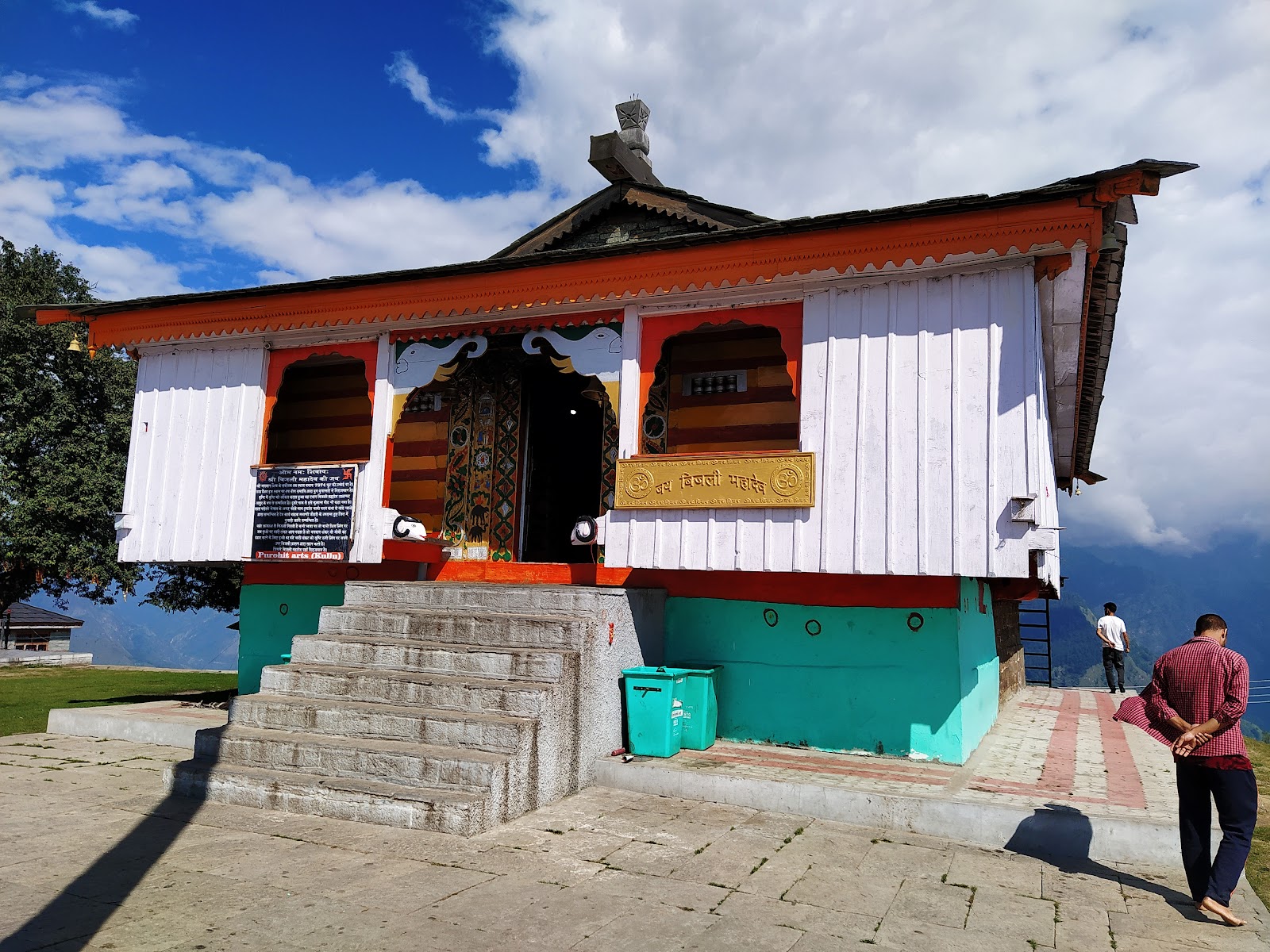
Bijli Mahadev Temple at a Glance
| Location | Kullu, Himachal Pradesh |
|---|---|
| Presiding deity | Shiva |
| Established | Ancient (legendary Pandava-exile-era foundation; current structure rebuilt over centuries) |
| Architecture | Kath-Kuni (Himachali stone-and-deodar wood) hilltop shrine, 2,435 m elevation |
| Timings | Sunrise to sunset daily |
| Address | Kashawri Village, Kullu Valley, Kullu District, Himachal Pradesh 175101 |
History of Bijli Mahadev Temple
Dedicated to Lord Shiva, the temple commemorates Shiva's victory over the asura Jalandhara (or, in another variant, the demon Kulanta) whom he defeated with his trident to save the Kullu Valley. Local tradition holds that the temple was built by the Pandavas during their years of exile from Hastinapura. It is one of the ancient Shiva shrines of the Kullu Valley, with the related Basheshwar Mahadev temple at Bajaura lying about 23 km away. The site follows the Kath-Kuni architectural style native to the Mahasu region.
Festivals Celebrated at Bijli Mahadev Temple
- Maha Shivratri
- Sawan (Shravan)
- Kullu Dussehra
How to Reach Bijli Mahadev Temple
Nearest airport: Bhuntar (Kullu-Manali) Airport, ~11 km from Kullu town. Nearest railhead: Joginder Nagar narrow-gauge or Chandigarh broad-gauge (~250 km). By road: well-connected by HRTC buses from Chandigarh, Delhi, Shimla and Manali to Kullu; from Kullu town ~10 km followed by a 3 km trek from the last motorable point (the Naggar-Jana route through deodar forests is the most popular approach).
Temples Near Bijli Mahadev Temple
- Shani Deva Temple, KharalHimachal Pradesh · about 5 km in a straight line
- Shri Raghunath Temple, KulluHimachal Pradesh · about 5 km in a straight line
- Sheetla Mata Mandir, KulluHimachal Pradesh · about 6 km in a straight line
- Jagannathi Devi Temple, BhekhliHimachal Pradesh · about 7 km in a straight line
- Maa Vaishno Devi Temple (Kullu)Himachal Pradesh · about 7 km in a straight line
- Shri Basheshwar Mahadev Temple (Bishweshwar Temple)Himachal Pradesh · about 9 km in a straight line
More Shiva Temples to Visit
- Gauri Shankar Temple, NaggarHimachal Pradesh
- Shiv Mandir, ManikaranHimachal Pradesh
- Dashal Mahadev TempleHimachal Pradesh
- Gauri Shankar Temple, Dashal (Hallan-i)Himachal Pradesh
- Baba Bhootnath TempleHimachal Pradesh
- Jagatsukh Mandir (Sandhya Gayatri Temple)Himachal Pradesh
Frequently Asked Questions about Bijli Mahadev Temple
Where is Bijli Mahadev Temple located?
- Bijli Mahadev Temple is located at Kashawri Village, Kullu Valley, Kullu District, Himachal Pradesh 175101, in Kullu, Himachal Pradesh, India.
Who is the presiding deity at Bijli Mahadev Temple?
- The presiding deity at Bijli Mahadev Temple is Shiva (also known as Mahadev, Bholenath), worshipped in the Shaiva tradition.
What are the timings of Bijli Mahadev Temple?
- Bijli Mahadev Temple is generally open Sunrise to sunset daily. Timings can vary on festival days and special occasions — verify with the temple before your visit.
When was Bijli Mahadev Temple built?
- Bijli Mahadev Temple was established Ancient (legendary Pandava-exile-era foundation; current structure rebuilt over centuries). Portions of the structure have been added and renovated by successive dynasties over the centuries.
What is the architectural style of Bijli Mahadev Temple?
- Bijli Mahadev Temple is built in the Kath-Kuni (Himachali stone-and-deodar wood) hilltop shrine, 2,435 m elevation style, characteristic of Shiva shrines of this region.
Which festivals are celebrated at Bijli Mahadev Temple?
- The principal festivals celebrated at Bijli Mahadev Temple include Maha Shivratri, Sawan (Shravan), Kullu Dussehra. These draw large crowds of pilgrims from across Himachal Pradesh and beyond.
How can I reach Bijli Mahadev Temple?
- Nearest airport: Bhuntar (Kullu-Manali) Airport, ~11 km from Kullu town. Nearest railhead: Joginder Nagar narrow-gauge or Chandigarh broad-gauge (~250 km). By road: well-connected by HRTC buses from Chandigarh, Delhi, Shimla and Manali to Kullu; from Kullu town ~10 km followed by a 3 km trek from the last motorable point (the Naggar-Jana route through deodar forests is the most popular approach).
Why is Bijli Mahadev Temple significant?
- Bijli Mahadev Temple, a mountaintop Shiva shrine in Kullu, is famed for its lightning-drawn trishul and the ritual re-fusing of its shattered lingam.