Laxmi Narayan Temple
Also known as Lakshmi Narayan Mandir, Laxmi Narayana Temple Complex, Chamba Laxminarayan Temple
Laxmi Narayan Temple, Chamba, Himachal Pradesh, is the town's oldest shrine complex, six sanctums to Vishnu built around 920 CE by Raja Sahil Varman.
Photos of Laxmi Narayan Temple
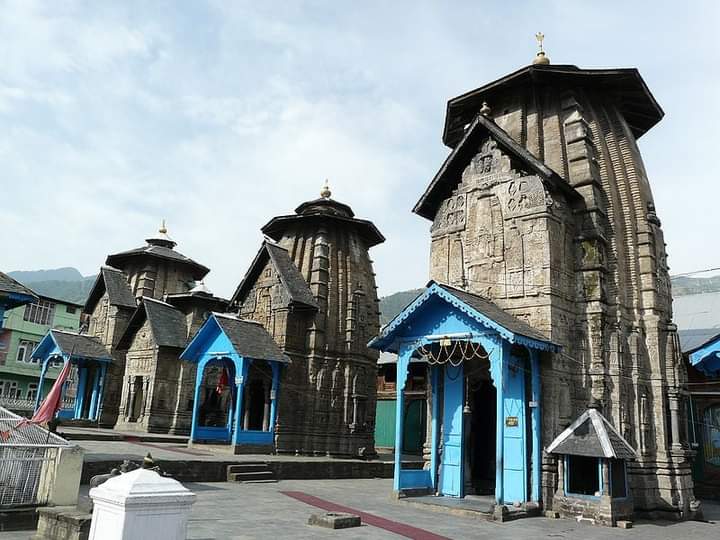
Laxmi Narayan Temple at a Glance
| Location | Chamba, Himachal Pradesh |
|---|---|
| Presiding deity | Vishnu |
| Established | 10th century CE (built by Raja Sahil Varman, founder of Chamba town) |
| Architecture | Shikhara-style stone temple complex of six shrines, North Indian Nagara architecture with wood-carved doorways |
| Timings | Open daily, 6:00 AM – 12:00 PM and 4:00 PM – 8:00 PM (main aarti at dawn and dusk) |
| Address | Mohalla, Hatnala Gali, Chowgan Mohalla, Chamba, Himachal Pradesh 176310 |
History of Laxmi Narayan Temple
Raja Sahil Varman founded Chamba town in the early 10th century and consecrated this temple complex as its spiritual centre, modelling it partly on the Chaurasi temples of the old Bharmour capital. Successive Chamba rulers added the surrounding shrines over subsequent centuries, giving the complex its present six-temple layout. Each year during the Minjar Mela (July-August), the temple's silver-plated ceremonial mohras are taken out in a grand procession through Chamba town, and devotees offer minjar (silken maize-tassel) threads before immersing them in the Ravi river.
Festivals Celebrated at Laxmi Narayan Temple
- Minjar Mela (July-August)
- Janmashtami
- Chaitra Navratri
- Sharad Navratri
How to Reach Laxmi Narayan Temple
Nearest airport: Kangra (Gaggal) Airport (~110 km). Nearest railhead: Pathankot (~56 km). By road: in the heart of Chamba town, a short walk from the Chowgan ground; well connected by HRTC buses from Pathankot, Dalhousie and Dharamshala.
Temples Near Laxmi Narayan Temple
- Shri Hari Rai Temple, ChambaHimachal Pradesh · about 0 km in a straight line
- Sui Mata Mandir, ChambaHimachal Pradesh · about 0 km in a straight line
- Chamunda Devi Mandir, ChambaHimachal Pradesh · about 1 km in a straight line
- Narsingh Temple, ChambaHimachal Pradesh · about 1 km in a straight line
- Shani Dev Temple, ChambaHimachal Pradesh · about 1 km in a straight line
- Jagdamba Temple, KhajjiarHimachal Pradesh · about 6 km in a straight line
More Vishnu Temples to Visit
- Kuldev Narayan Ji Temple, PanwiHimachal Pradesh
- Narayana Temple, RoghiHimachal Pradesh
- Shri Narayan Nagin Mata Temple, KalpaHimachal Pradesh
- Kamru Fort (Badri Vishal Temple)Himachal Pradesh
- Shri Badri Narayan ji Temple, BatseriHimachal Pradesh
- Brahma SarovarHaryana
Frequently Asked Questions about Laxmi Narayan Temple
Where is Laxmi Narayan Temple located?
- Laxmi Narayan Temple is located at Mohalla, Hatnala Gali, Chowgan Mohalla, Chamba, Himachal Pradesh 176310, in Chamba, Himachal Pradesh, India.
Who is the presiding deity at Laxmi Narayan Temple?
- The presiding deity at Laxmi Narayan Temple is Vishnu (also known as Narayana, Hari), worshipped in the Vaishnava tradition.
What are the timings of Laxmi Narayan Temple?
- Laxmi Narayan Temple is generally open Open daily, 6:00 AM – 12:00 PM and 4:00 PM – 8:00 PM (main aarti at dawn and dusk). Timings can vary on festival days and special occasions — verify with the temple before your visit.
When was Laxmi Narayan Temple built?
- Laxmi Narayan Temple was established 10th century CE (built by Raja Sahil Varman, founder of Chamba town). Portions of the structure have been added and renovated by successive dynasties over the centuries.
What is the architectural style of Laxmi Narayan Temple?
- Laxmi Narayan Temple is built in the Shikhara-style stone temple complex of six shrines, North Indian Nagara architecture with wood-carved doorways style, characteristic of Vishnu shrines of this region.
Which festivals are celebrated at Laxmi Narayan Temple?
- The principal festivals celebrated at Laxmi Narayan Temple include Minjar Mela (July-August), Janmashtami, Chaitra Navratri, Sharad Navratri. These draw large crowds of pilgrims from across Himachal Pradesh and beyond.
How can I reach Laxmi Narayan Temple?
- Nearest airport: Kangra (Gaggal) Airport (~110 km). Nearest railhead: Pathankot (~56 km). By road: in the heart of Chamba town, a short walk from the Chowgan ground; well connected by HRTC buses from Pathankot, Dalhousie and Dharamshala.
Why is Laxmi Narayan Temple significant?
- Laxmi Narayan Temple, Chamba, Himachal Pradesh, is the town's oldest shrine complex, six sanctums to Vishnu built around 920 CE by Raja Sahil Varman.