Mathi Temple, Chitkul
Also known as Mathi Devi Temple, Chitkul Mata Temple, Chitkul Mathi Devi Temple
Mathi Temple in Chitkul, Kinnaur, is revered as guardian goddess of the last inhabited village before the Indo-Tibet border, central to local identity.
Photos of Mathi Temple, Chitkul
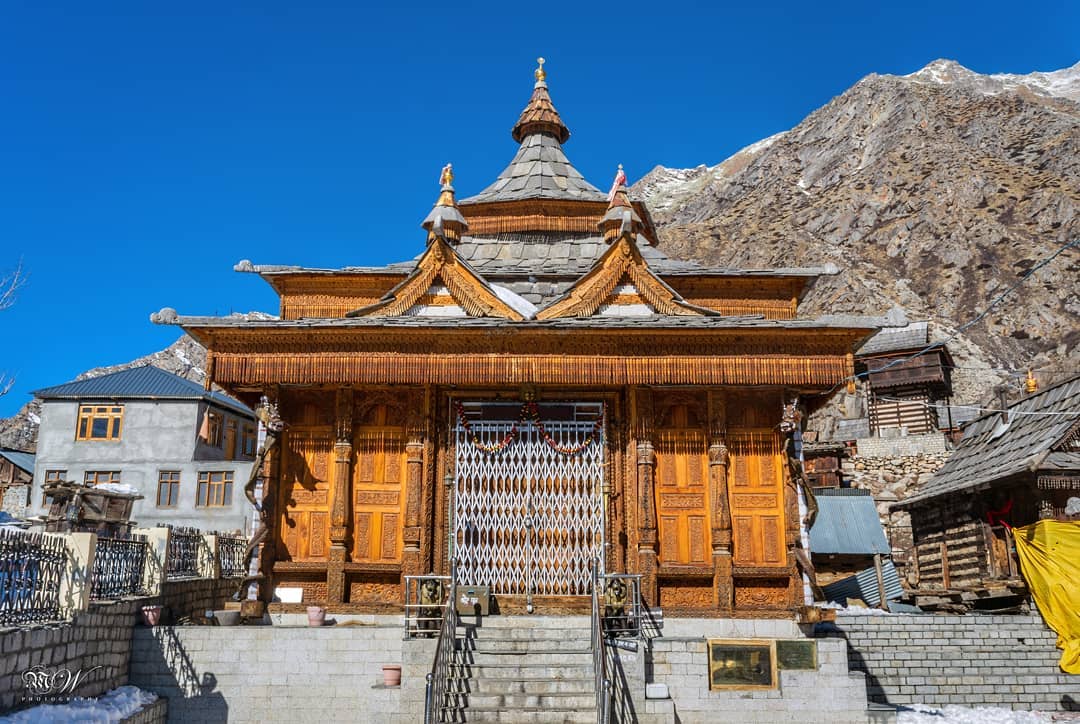
Mathi Temple, Chitkul at a Glance
| Location | Kinnaur, Himachal Pradesh |
|---|---|
| Established | Widely cited as roughly 500 years old (Kath Kuni construction) |
| Architecture | Kath Kuni architecture — alternating layers of stone and deodar wood, a complex of three temples, the oldest reputedly built by a Garhwal settler roughly five centuries ago |
| Timings | Open daily, dawn to dusk |
| Address | Chitkul, Himachal Pradesh 172106 |
History of Mathi Temple, Chitkul
According to local legend, Mathi Devi — identified in some tellings with Parvati — journeyed from Vrindavan across Himalayan passes to reach the Baspa valley, appointing family members as guardian devtas over the valley's divisions, including Narenas at Chasu and Shamshares at Rakchham, before settling permanently at Chitkul as her final abode. Her arrival is credited locally with transforming the region into fertile, protected land. The temple complex houses a wooden ark (palanquin) covered in cloth and yak-tail tufts, used in ceremonial processions still followed today.
Festivals Celebrated at Mathi Temple, Chitkul
- Fulaich
- Chitkul devta festivals (dates set by local committee)
How to Reach Mathi Temple, Chitkul
Nearest airport: Shimla, ~260 km, or Chandigarh. Nearest railhead: Shimla/Kalka. By road: NH-5 via Karcham to Sangla, then via Rakcham to Chitkul, the last road-connected village (~28 km beyond Sangla).
Temples Near Mathi Temple, Chitkul
- Rakcham TempleHimachal Pradesh · about 9 km in a straight line
- Shri Badri Narayan ji Temple, BatseriHimachal Pradesh · about 14 km in a straight line
- Charang MonasteryHimachal Pradesh · about 17 km in a straight line
- Karu Devta Temple, DhumtiHimachal Pradesh · about 18 km in a straight line
- Shree Bering Nag Ji Temple, SanglaHimachal Pradesh · about 18 km in a straight line
- Kamru Fort (Badri Vishal Temple)Himachal Pradesh · about 19 km in a straight line
More Temples in Himachal Pradesh
- Kinner Kailash ShivlingHimachal Pradesh
- Ram Temple, TanglingHimachal Pradesh
- Shree Maating Kuldev Ji Temple, RispaHimachal Pradesh
- Shree Maheshwar Ji Temple, MebarHimachal Pradesh
- Kalpa MonasteryHimachal Pradesh
- Khawangi MandirHimachal Pradesh
Frequently Asked Questions about Mathi Temple, Chitkul
Where is Mathi Temple, Chitkul located?
- Mathi Temple, Chitkul is located at Chitkul, Himachal Pradesh 172106, in Kinnaur, Himachal Pradesh, India.
What are the timings of Mathi Temple, Chitkul?
- Mathi Temple, Chitkul is generally open Open daily, dawn to dusk. Timings can vary on festival days and special occasions — verify with the temple before your visit.
When was Mathi Temple, Chitkul built?
- Mathi Temple, Chitkul was established Widely cited as roughly 500 years old (Kath Kuni construction). Portions of the structure have been added and renovated by successive dynasties over the centuries.
What is the architectural style of Mathi Temple, Chitkul?
- Mathi Temple, Chitkul is built in the Kath Kuni architecture — alternating layers of stone and deodar wood, a complex of three temples, the oldest reputedly built by a Garhwal settler roughly five centuries ago style.
Which festivals are celebrated at Mathi Temple, Chitkul?
- The principal festivals celebrated at Mathi Temple, Chitkul include Fulaich, Chitkul devta festivals (dates set by local committee). These draw large crowds of pilgrims from across Himachal Pradesh and beyond.
How can I reach Mathi Temple, Chitkul?
- Nearest airport: Shimla, ~260 km, or Chandigarh. Nearest railhead: Shimla/Kalka. By road: NH-5 via Karcham to Sangla, then via Rakcham to Chitkul, the last road-connected village (~28 km beyond Sangla).
Why is Mathi Temple, Chitkul significant?
- Mathi Temple in Chitkul, Kinnaur, is revered as guardian goddess of the last inhabited village before the Indo-Tibet border, central to local identity.