Shiv Mandir, Manikaran
Also known as Manikaran Shiva Temple, Sri Manikaran Shiv Mandir, Shiv-Parvati Temple Manikaran
Shiv Mandir in Manikaran, Kullu, stands beside the Sikh gurdwara by naturally boiling hot springs on the Parvati River, a rare shared Hindu-Sikh shrine.
Photos of Shiv Mandir, Manikaran
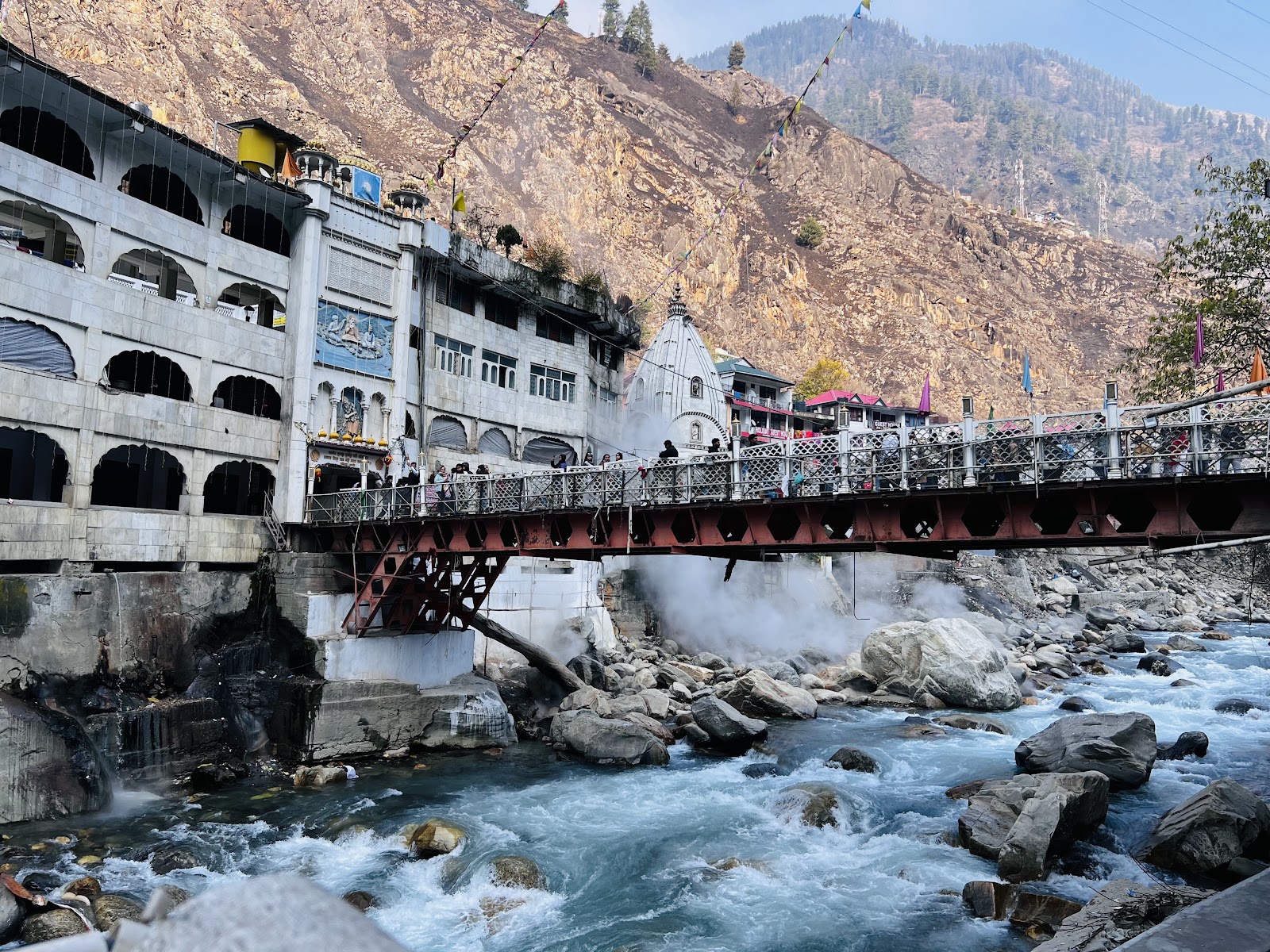
Shiv Mandir, Manikaran at a Glance
| Location | Kullu, Himachal Pradesh |
|---|---|
| Presiding deity | Shiva |
| Established | Ancient (pre-15th century; damaged in 1905 Kangra earthquake, reconstructed thereafter) |
| Architecture | Himachali hill-temple pagoda shikhara on the bank of the Parvati River, with hot springs at the base |
| Timings | Sunrise to sunset daily (hot springs 07:00-19:00) |
| Address | Manikaran, Sosan, Parvati Valley, Kullu District, Himachal Pradesh 175105 |
History of Shiv Mandir, Manikaran
According to legend, Parvati lost a precious earring (mani) in the Parvati River; Shiva's third eye ignited the serpent Shesha, whose hissing released boiling water that brought the jewel back to the surface, giving the town its name (mani + karan = ear + jewel). The original temple tilted in the catastrophic 1905 Kangra earthquake and was reconstructed. Local tradition holds that the devas of Kullu Valley visit the temple on specified ritual dates, and that Rama rested here en route to Lanka. The site also has a strong link to Manu recreating human life after the great flood.
Festivals Celebrated at Shiv Mandir, Manikaran
- Maha Shivratri
- Navratri
- Sawan Mondays (Shravan)
- Diwali
How to Reach Shiv Mandir, Manikaran
Nearest airport: Bhuntar (Kullu-Manali) Airport, ~35 km. Nearest railhead: Chandigarh broad-gauge (~250 km). Well connected by HRTC buses and taxis from Kullu (45 km) and Bhuntar (35 km) via Kasol along the Parvati Valley.
Temples Near Shiv Mandir, Manikaran
- Manikaran SahibHimachal Pradesh · about 1 km in a straight line
- Jamlu Rishi Temple, MalanaHimachal Pradesh · about 9 km in a straight line
- Murlidhar Krishna Mandir, Naggar (Thawa)Himachal Pradesh · about 19 km in a straight line
- Tripura Sundari Mandir, NaggarHimachal Pradesh · about 19 km in a straight line
- Dashal Mahadev TempleHimachal Pradesh · about 20 km in a straight line
- Gauri Shankar Temple, Dashal (Hallan-i)Himachal Pradesh · about 20 km in a straight line
More Shiva Temples to Visit
- Gauri Shankar Temple, NaggarHimachal Pradesh
- Bijli Mahadev TempleHimachal Pradesh
- Jagatsukh Mandir (Sandhya Gayatri Temple)Himachal Pradesh
- Shri Basheshwar Mahadev Temple (Bishweshwar Temple)Himachal Pradesh
- Mahakaleshwar Shiv TempleHimachal Pradesh
- Panchvaktra TempleHimachal Pradesh
Frequently Asked Questions about Shiv Mandir, Manikaran
Where is Shiv Mandir, Manikaran located?
- Shiv Mandir, Manikaran is located at Manikaran, Sosan, Parvati Valley, Kullu District, Himachal Pradesh 175105, in Kullu, Himachal Pradesh, India.
Who is the presiding deity at Shiv Mandir, Manikaran?
- The presiding deity at Shiv Mandir, Manikaran is Shiva (also known as Mahadev, Bholenath), worshipped in the Shaiva tradition.
What are the timings of Shiv Mandir, Manikaran?
- Shiv Mandir, Manikaran is generally open Sunrise to sunset daily (hot springs 07:00-19:00). Timings can vary on festival days and special occasions — verify with the temple before your visit.
When was Shiv Mandir, Manikaran built?
- Shiv Mandir, Manikaran was established Ancient (pre-15th century; damaged in 1905 Kangra earthquake, reconstructed thereafter). Portions of the structure have been added and renovated by successive dynasties over the centuries.
What is the architectural style of Shiv Mandir, Manikaran?
- Shiv Mandir, Manikaran is built in the Himachali hill-temple pagoda shikhara on the bank of the Parvati River, with hot springs at the base style, characteristic of Shiva shrines of this region.
Which festivals are celebrated at Shiv Mandir, Manikaran?
- The principal festivals celebrated at Shiv Mandir, Manikaran include Maha Shivratri, Navratri, Sawan Mondays (Shravan), Diwali. These draw large crowds of pilgrims from across Himachal Pradesh and beyond.
How can I reach Shiv Mandir, Manikaran?
- Nearest airport: Bhuntar (Kullu-Manali) Airport, ~35 km. Nearest railhead: Chandigarh broad-gauge (~250 km). Well connected by HRTC buses and taxis from Kullu (45 km) and Bhuntar (35 km) via Kasol along the Parvati Valley.
Why is Shiv Mandir, Manikaran significant?
- Shiv Mandir in Manikaran, Kullu, stands beside the Sikh gurdwara by naturally boiling hot springs on the Parvati River, a rare shared Hindu-Sikh shrine.