Dakshineswar Kali Temple
Nine-spired temple on the Hooghly built by Rani Rashmoni. Ramakrishna Paramhansa served here as a priest, making it a spiritual landmark of modern Bengal.
Photos of Dakshineswar Kali Temple
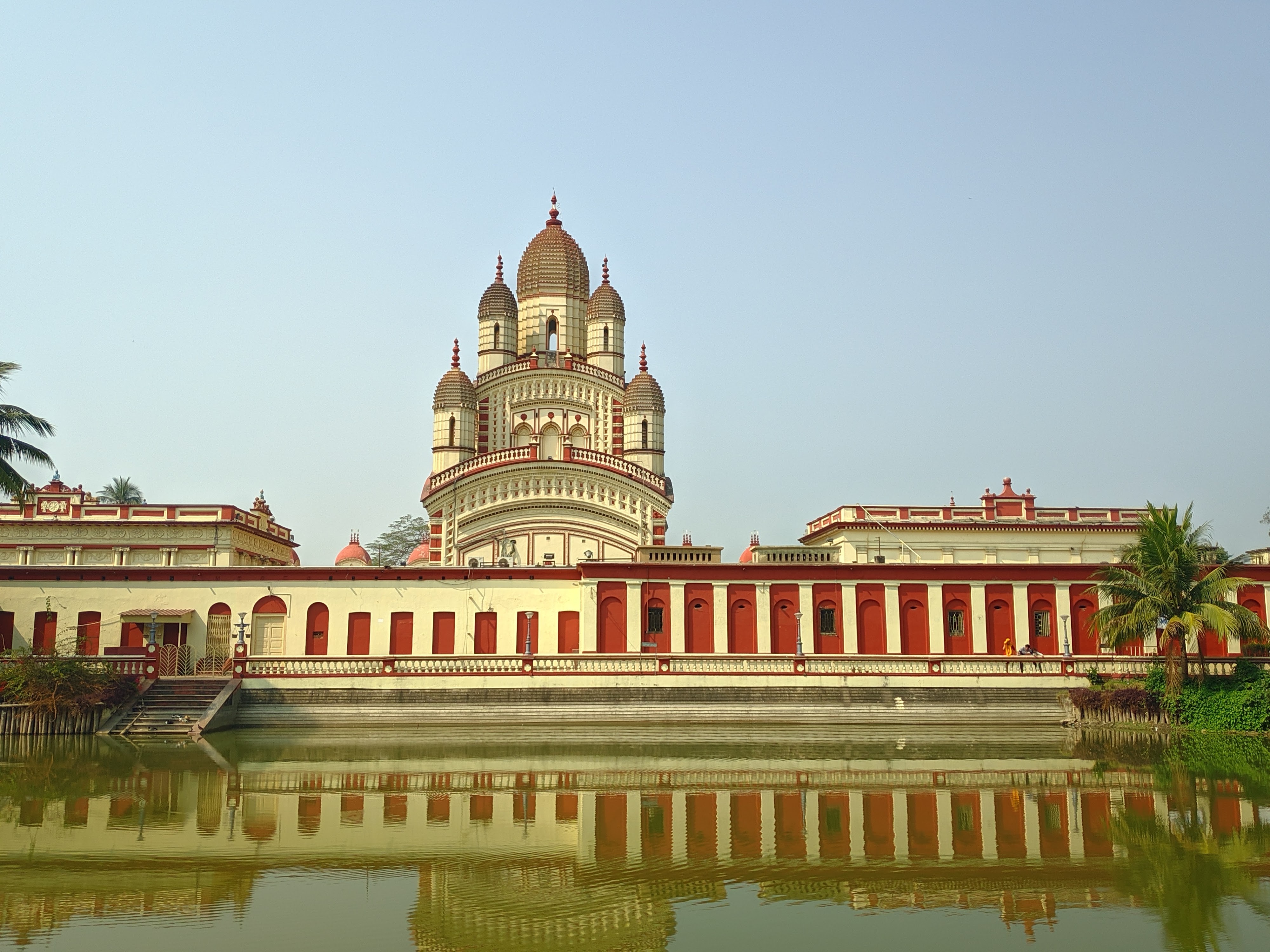
Dakshineswar Kali Temple at a Glance
| Location | Kolkata, West Bengal |
|---|---|
| Presiding deity | Kali |
| Established | 1855 CE |
| Architecture | Bengal terracotta / Nabaratna |
| Timings | 06:00–12:30, 15:00–20:30 |
| Best time to visit | October to February for weather; Kali Puja (October to November) and Kalpataru Day (1 January) are the busiest days. |
| Address | Rani Rashmoni Rd, Kolkata 700076 |
About Dakshineswar Kali Temple
The Dakshineswar Kali Temple stands on the east bank of the Hooghly river, north of Kolkata. It was founded in 1855 by Rani Rashmoni, a wealthy widow of the Janbazar family who is said to have been inspired by a dream of the goddess to build a temple. The deity is Bhavatarini, a form of Kali, who is worshipped as the saviour of the world.
The temple is as well known for its association with Sri Ramakrishna, who served here as a priest and who is regarded as one of the central figures of modern Bengali spirituality. His disciple Swami Vivekananda later founded the Ramakrishna Mission, whose headquarters at Belur Math lie across the river.
History of Dakshineswar Kali Temple
The Nabaratna (nine-spired) temple was consecrated on Snana Yatra day, 31 May 1855. Ramakrishna lived in the northwest chamber for the last 30 years of his life.
Architecture of Dakshineswar Kali Temple
The main temple is a nine-spired Navaratna structure in the Bengal style, about 100 feet high, on a raised platform, with a large courtyard around it. The courtyard is flanked by a row of twelve identical Shiva temples along the riverbank, and a Radha-Krishna temple stands to one side.
Ramakrishna's room in the northwest corner of the complex, the nahabat (music tower) where Sarada Devi stayed, and the Panchavati, a grove of five trees where he meditated, are preserved as places of pilgrimage within the compound.
Rituals and Worship at Dakshineswar Kali Temple
The temple opens before dawn with the morning aarti, and offerings are made in the Bengali style with hibiscus flowers, sweets and cloth. The Kali Puja on the new moon night in autumn is the biggest event, with the temple lit up and worship through the night.
Snana Yatra in May or June commemorates the date of the temple's consecration, and Kalpataru Day on 1 January marks the day in 1886 when Ramakrishna is said to have blessed his devotees. Ramakrishna Jayanti is observed in February or March.
Festivals Celebrated at Dakshineswar Kali Temple
- Kali Puja
- Snan Yatra
- Ramakrishna Jayanti
Visiting Dakshineswar Kali Temple: Planning Your Trip
The temple is crowded on Sundays and festival days, and the queue to the main shrine moves slowly. Footwear must be left at the entrance, and dress should be modest. Phones are not permitted in the sanctum.
Belur Math, the Ramakrishna Mission's headquarters, is a short ferry ride or road trip away. Many visitors combine the two temples in a day, and also visit the Kalighat temple and the Victoria Memorial in the city.
How to Reach Dakshineswar Kali Temple
Dakshineswar has its own suburban rail and metro station, 12 km north of central Kolkata.
Temples Near Dakshineswar Kali Temple
- Kalighat Kali TempleWest Bengal · about 15 km in a straight line
More Kali Temples to Visit
- Kalisthan Temple, NahanHimachal Pradesh
- Kali Mata Temple, NakhleraHimachal Pradesh
- Mata Shyama Kali TempleHimachal Pradesh
- Kali Math Temple LehLadakh
Frequently Asked Questions about Dakshineswar Kali Temple
Where is Dakshineswar Kali Temple located?
- Dakshineswar Kali Temple is located at Rani Rashmoni Rd, Kolkata 700076, in Kolkata, West Bengal, India.
Who is the presiding deity at Dakshineswar Kali Temple?
- The presiding deity at Dakshineswar Kali Temple is Kali (also known as Kalika, Bhadrakali), worshipped in the Shakta tradition.
What are the timings of Dakshineswar Kali Temple?
- Dakshineswar Kali Temple is generally open 06:00–12:30, 15:00–20:30. Timings can vary on festival days and special occasions — verify with the temple before your visit.
When was Dakshineswar Kali Temple built?
- Dakshineswar Kali Temple was established 1855 CE. Portions of the structure have been added and renovated by successive dynasties over the centuries.
What is the architectural style of Dakshineswar Kali Temple?
- Dakshineswar Kali Temple is built in the Bengal terracotta / Nabaratna style, characteristic of Kali shrines of this region.
Which festivals are celebrated at Dakshineswar Kali Temple?
- The principal festivals celebrated at Dakshineswar Kali Temple include Kali Puja, Snan Yatra, Ramakrishna Jayanti. These draw large crowds of pilgrims from across West Bengal and beyond.
How can I reach Dakshineswar Kali Temple?
- Dakshineswar has its own suburban rail and metro station, 12 km north of central Kolkata.
Why is Dakshineswar Kali Temple significant?
- Nine-spired temple on the Hooghly built by Rani Rashmoni. Ramakrishna Paramhansa served here as a priest, making it a spiritual landmark of modern Bengal.
What is the best time to visit Dakshineswar Kali Temple?
- October to February for weather; Kali Puja (October to November) and Kalpataru Day (1 January) are the busiest days.