Maa Hateshwari Devi Temple, Darauda Dhaar
Also known as Hateshwari Temple, Sundernagar, Drouda Dhar Temple
Maa Hateshwari Devi Temple atop Darauda Dhaar near Sundernagar, Mandi, is a trusted hilltop shrine to the goddess of power and knowledge.
Photos of Maa Hateshwari Devi Temple, Darauda Dhaar
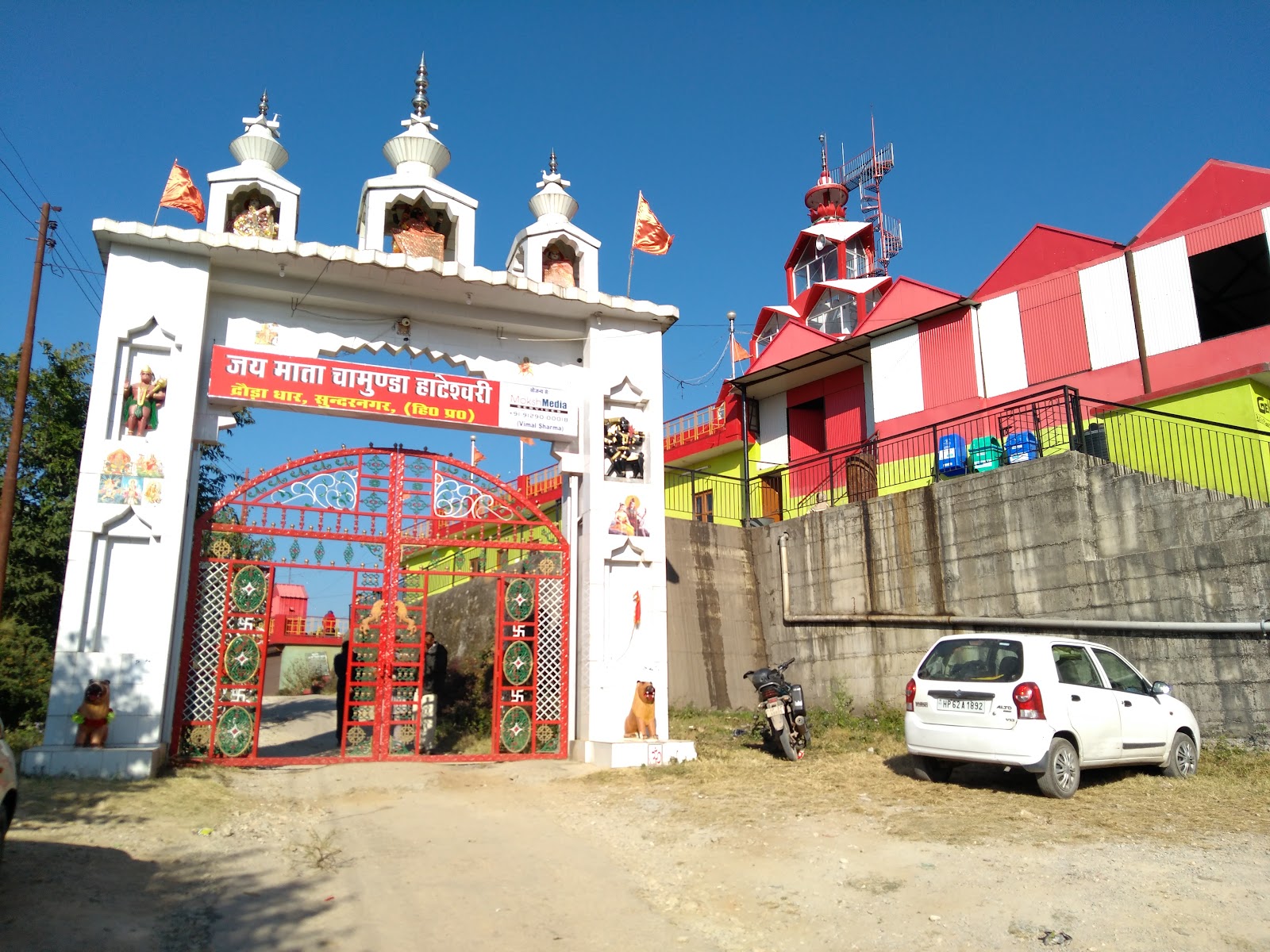
Maa Hateshwari Devi Temple, Darauda Dhaar at a Glance
| Location | Mandi, Himachal Pradesh |
|---|---|
| Presiding deity | Devi |
| Established | Undocumented; a longstanding hilltop shrine, rebuilt in recent decades |
| Architecture | Modern hilltop "green building" shrine — concrete plinth, glass panelling on all four sides, an inverted flower-petal-shaped roof and a solar panel at the entrance |
| Timings | 06:00–19:00 daily |
| Address | Drouda Dhar, Bhojpur, Himachal Pradesh 175002 |
History of Maa Hateshwari Devi Temple, Darauda Dhaar
No documented founding history survives; the site is known locally as an old hilltop Devi shrine that was rebuilt in recent decades in its current glass-and-concrete design, echoing the nearby Sheetla Devi temple.
Festivals Celebrated at Maa Hateshwari Devi Temple, Darauda Dhaar
- Weekly bhandara (Sunday and Tuesday)
How to Reach Maa Hateshwari Devi Temple, Darauda Dhaar
Nearest airport: Bhuntar (Kullu-Manali) Airport, ~84 km. Nearest railhead: Joginder Nagar narrow-gauge station, ~77 km. About 19-23 km from Mandi town and 6-7 km from Sundernagar via Chatrokhri Chowk.
Temples Near Maa Hateshwari Devi Temple, Darauda Dhaar
- Murari Devi TempleHimachal Pradesh · about 6 km in a straight line
- Shri Hateshwari Temple, DiargiHimachal Pradesh · about 8 km in a straight line
- Kamrunag TempleHimachal Pradesh · about 16 km in a straight line
- Baba Nahar Singh (Bajiya ji) Temple, DholraHimachal Pradesh · about 21 km in a straight line
- Bajrangbali Mandir, Baihna JatanHimachal Pradesh · about 21 km in a straight line
- Shree Naina Devi Ji, Sohra-BiyunsHimachal Pradesh · about 21 km in a straight line
More Devi Temples to Visit
- Nersha Mata TempleHimachal Pradesh
- Sheetla Mata Temple, JanglaHimachal Pradesh
- Shri Badoli Devi Ji TempleHimachal Pradesh
- Shri Bhimakali Temple, MandiHimachal Pradesh
- Ancient Maa Sheetla MandirHimachal Pradesh
- Chaturbhuja Mata TempleHimachal Pradesh
Frequently Asked Questions about Maa Hateshwari Devi Temple, Darauda Dhaar
Where is Maa Hateshwari Devi Temple, Darauda Dhaar located?
- Maa Hateshwari Devi Temple, Darauda Dhaar is located at Drouda Dhar, Bhojpur, Himachal Pradesh 175002, in Mandi, Himachal Pradesh, India.
Who is the presiding deity at Maa Hateshwari Devi Temple, Darauda Dhaar?
- The presiding deity at Maa Hateshwari Devi Temple, Darauda Dhaar is Devi (also known as Shakti, Durga), worshipped in the Shakta tradition.
What are the timings of Maa Hateshwari Devi Temple, Darauda Dhaar?
- Maa Hateshwari Devi Temple, Darauda Dhaar is generally open 06:00–19:00 daily. Timings can vary on festival days and special occasions — verify with the temple before your visit.
When was Maa Hateshwari Devi Temple, Darauda Dhaar built?
- Maa Hateshwari Devi Temple, Darauda Dhaar was established Undocumented; a longstanding hilltop shrine, rebuilt in recent decades. Portions of the structure have been added and renovated by successive dynasties over the centuries.
What is the architectural style of Maa Hateshwari Devi Temple, Darauda Dhaar?
- Maa Hateshwari Devi Temple, Darauda Dhaar is built in the Modern hilltop "green building" shrine — concrete plinth, glass panelling on all four sides, an inverted flower-petal-shaped roof and a solar panel at the entrance style, characteristic of Devi shrines of this region.
Which festivals are celebrated at Maa Hateshwari Devi Temple, Darauda Dhaar?
- The principal festivals celebrated at Maa Hateshwari Devi Temple, Darauda Dhaar include Weekly bhandara (Sunday and Tuesday). These draw large crowds of pilgrims from across Himachal Pradesh and beyond.
How can I reach Maa Hateshwari Devi Temple, Darauda Dhaar?
- Nearest airport: Bhuntar (Kullu-Manali) Airport, ~84 km. Nearest railhead: Joginder Nagar narrow-gauge station, ~77 km. About 19-23 km from Mandi town and 6-7 km from Sundernagar via Chatrokhri Chowk.
Why is Maa Hateshwari Devi Temple, Darauda Dhaar significant?
- Maa Hateshwari Devi Temple atop Darauda Dhaar near Sundernagar, Mandi, is a trusted hilltop shrine to the goddess of power and knowledge.