Hidimba Devi Temple
Also known as Hadimba Temple, Dhungri Temple, Dhungari Temple, Hidimba Devi Mandir, Hidimbi Devi Temple
Hidimba Devi Temple, set in a cedar forest above Manali, Kullu, enshrines the Mahabharata's Hidimba and draws vast crowds of pilgrims and tourists.
Photos of Hidimba Devi Temple
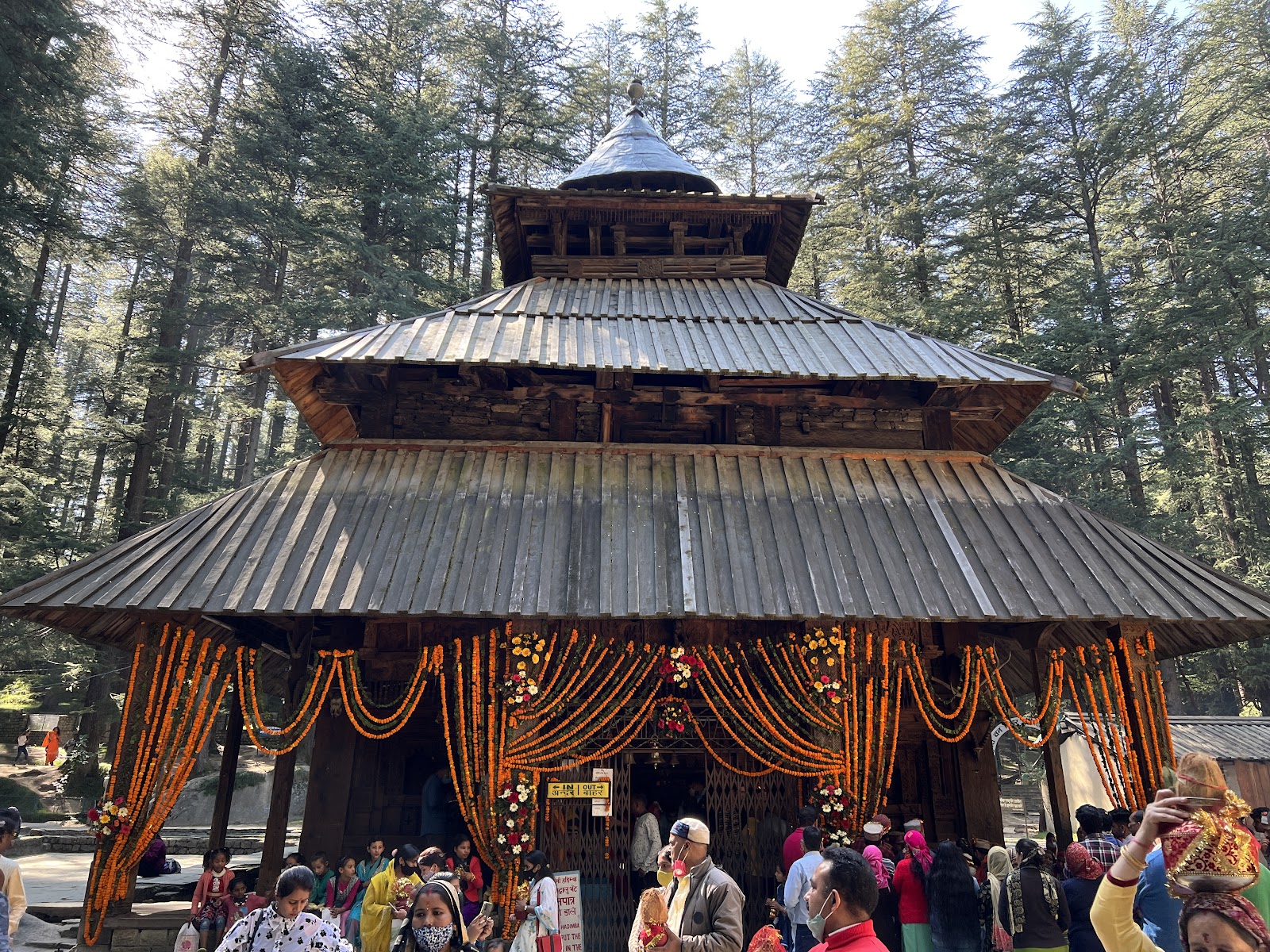
Hidimba Devi Temple at a Glance
| Location | Kullu, Himachal Pradesh |
|---|---|
| Presiding deity | Devi |
| Established | 1553 CE |
| Architecture | Pahari pagoda-style wooden temple (Kath-kuni), 24-m three-tiered tower built without nails atop a massive boulder |
| Timings | 08:00-18:00 daily |
| Address | Dhungri, Manali, Kullu District, Himachal Pradesh 175131 |
History of Hidimba Devi Temple
Built in 1553 CE by Maharaja Bahadur Singh of Kullu over a massive boulder in the Dhungri Van Vihar (cedar forest) that was itself worshipped as the goddess. According to the Mahabharata, when the Pandavas were exiled to Manali, the rakshasa Hidimb attacked them; Bhima killed Hidimb in combat and married his sister Hidimba, who bore him a son, Ghatotkacha. After the Pandavas' exile ended, Hidimba chose to remain in Manali and performed severe tapasya, ultimately attaining the status of a Devi. The current 24-m wooden pagoda structure, with three square timber-tiled roofs topped by a brass cone, is built directly over the sacred rock. A small Ghatotkacha shrine stands about 70 m from the main temple.
Festivals Celebrated at Hidimba Devi Temple
- Dhungri Mela
- Hidimba Devi Fair
- Navaratri
- Maha Shivaratri
How to Reach Hidimba Devi Temple
Nearest airport: Bhuntar (Kullu-Manali) Airport, ~50 km. Nearest railhead: Chandigarh broad-gauge (~310 km) or Joginder Nagar narrow-gauge (~165 km). By road: Manali is well connected by HRTC and private buses from Delhi (~530 km), Chandigarh, and Shimla. The temple is ~2 km from Manali town centre, ~600 m from the Mall Road.
Temples Near Hidimba Devi Temple
- Manu TempleHimachal Pradesh · about 1 km in a straight line
- Jagatsukh Mandir (Sandhya Gayatri Temple)Himachal Pradesh · about 6 km in a straight line
- Dashal Mahadev TempleHimachal Pradesh · about 12 km in a straight line
- Gauri Shankar Temple, Dashal (Hallan-i)Himachal Pradesh · about 12 km in a straight line
- Gauri Shankar Temple, NaggarHimachal Pradesh · about 15 km in a straight line
- Tripura Sundari Mandir, NaggarHimachal Pradesh · about 15 km in a straight line
More Devi Temples to Visit
- Maa Vaishno Devi Temple (Kullu)Himachal Pradesh
- Jagannathi Devi Temple, BhekhliHimachal Pradesh
- Sheetla Mata Mandir, KulluHimachal Pradesh
- Laake Wali Mata MandirHimachal Pradesh
- Shri Sishudatri Simsa Mata MandirHimachal Pradesh
- Shri Hanogi Mata TempleHimachal Pradesh
Frequently Asked Questions about Hidimba Devi Temple
Where is Hidimba Devi Temple located?
- Hidimba Devi Temple is located at Dhungri, Manali, Kullu District, Himachal Pradesh 175131, in Kullu, Himachal Pradesh, India.
Who is the presiding deity at Hidimba Devi Temple?
- The presiding deity at Hidimba Devi Temple is Devi (also known as Shakti, Durga), worshipped in the Shakta tradition.
What are the timings of Hidimba Devi Temple?
- Hidimba Devi Temple is generally open 08:00-18:00 daily. Timings can vary on festival days and special occasions — verify with the temple before your visit.
When was Hidimba Devi Temple built?
- Hidimba Devi Temple was established 1553 CE. Portions of the structure have been added and renovated by successive dynasties over the centuries.
What is the architectural style of Hidimba Devi Temple?
- Hidimba Devi Temple is built in the Pahari pagoda-style wooden temple (Kath-kuni), 24-m three-tiered tower built without nails atop a massive boulder style, characteristic of Devi shrines of this region.
Which festivals are celebrated at Hidimba Devi Temple?
- The principal festivals celebrated at Hidimba Devi Temple include Dhungri Mela, Hidimba Devi Fair, Navaratri, Maha Shivaratri. These draw large crowds of pilgrims from across Himachal Pradesh and beyond.
How can I reach Hidimba Devi Temple?
- Nearest airport: Bhuntar (Kullu-Manali) Airport, ~50 km. Nearest railhead: Chandigarh broad-gauge (~310 km) or Joginder Nagar narrow-gauge (~165 km). By road: Manali is well connected by HRTC and private buses from Delhi (~530 km), Chandigarh, and Shimla. The temple is ~2 km from Manali town centre, ~600 m from the Mall Road.
Why is Hidimba Devi Temple significant?
- Hidimba Devi Temple, set in a cedar forest above Manali, Kullu, enshrines the Mahabharata's Hidimba and draws vast crowds of pilgrims and tourists.