Kedarnath Temple
Also known as Kedarnath Jyotirlinga
The northernmost and highest of the twelve Jyotirlingas, at 3,583 metres in the Garhwal Himalayas. Part of both the Char Dham and Chota Char Dham circuits.
Photos of Kedarnath Temple
Kedarnath Temple at a Glance
| Location | Kedarnath, Uttarakhand |
|---|---|
| Presiding deity | Shiva |
| Established | 8th century CE (rebuilt) |
| Architecture | Garhwal |
| Timings | 04:00–15:00, 17:00–21:00 (May–Nov) |
| Best time to visit | May to June and September to October; the shrine is closed from about November to April, and the monsoon (July to August) brings landslide risk. |
| Address | Kedarnath, Rudraprayag 246445 |
About Kedarnath Temple
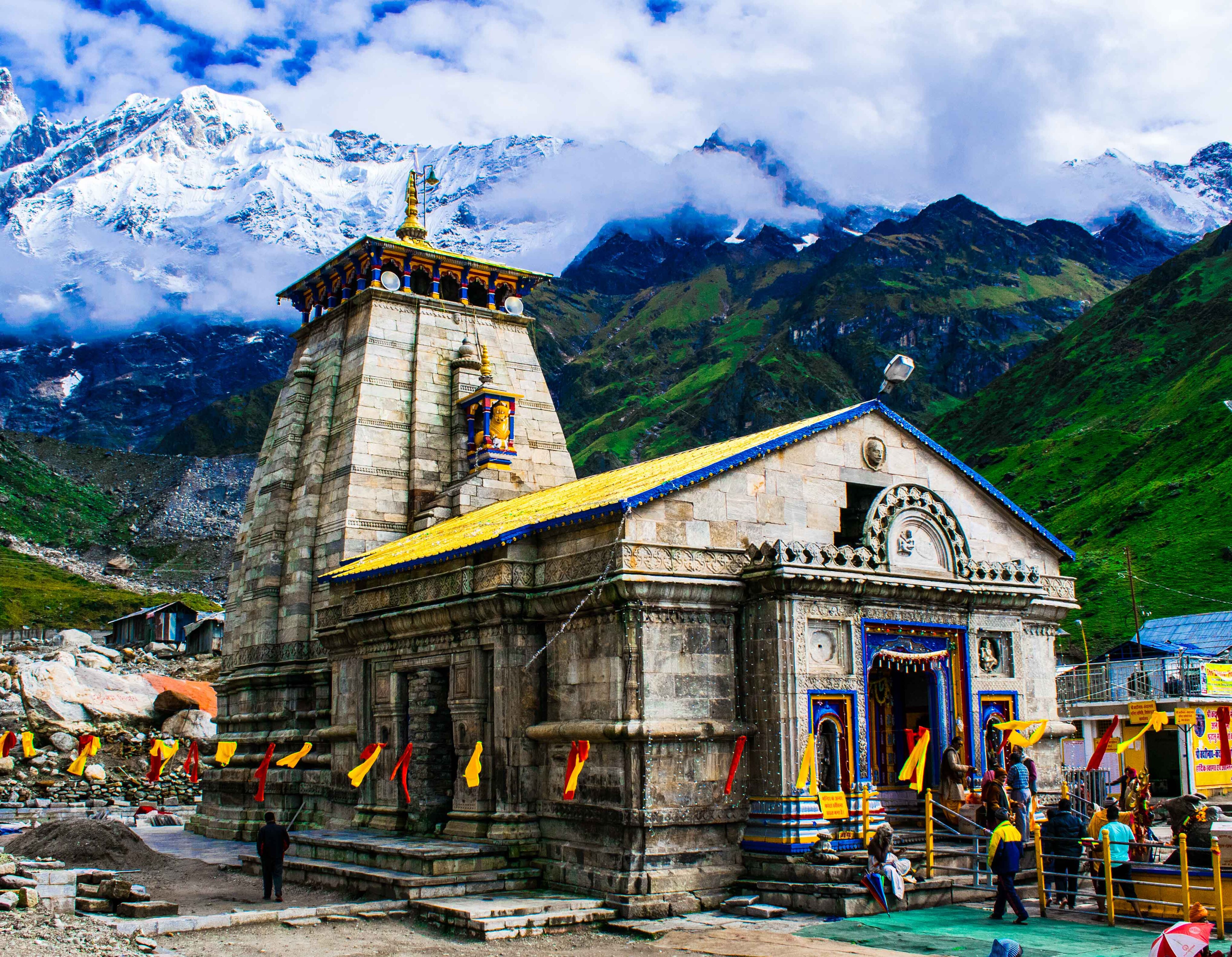
Kedarnath stands at the head of the Mandakini valley in Uttarakhand's Rudraprayag district, ringed by snow peaks and reached only on foot, by pony or by air. It is counted among the twelve Jyotirlingas and is also one of the Panch Kedar, the five Himalayan shrines where the body of Shiva is believed to be worshipped in parts.
The Mahabharata tradition explains why. Seeking Shiva's forgiveness after the war, the Pandavas followed him into the mountains; he took the form of a bull and sank into the earth at Guptkashi. His hump is said to have surfaced at Kedarnath, while his arms, face, navel and locks appeared at Tungnath, Rudranath, Madhyamaheshwar and Kalpeshwar. The sanctum therefore holds no carved image: the deity is a conical, rounded rock worshipped as the bull's hump.
History of Kedarnath Temple
Traditionally attributed to Adi Shankara. The temple famously survived the 2013 Kedarnath floods when a boulder diverted the debris flow.
Architecture of Kedarnath Temple
The temple is built of massive grey stone slabs fitted together without visible mortar, a form that has to cope with heavy snow and thin air. A covered assembly hall leads to the inner sanctum, and its walls carry figures of the Pandavas, Draupadi and Krishna. A stone Nandi faces the entrance from the porch.
A large boulder now sits behind the temple. It lodged there during the flood of June 2013 and split the debris flow around the building, which is why the structure survived while much of the settlement did not.
Rituals and Worship at Kedarnath Temple
Worship follows the Himalayan calendar. The lingam is anointed with water and ghee in the morning, and devotees offer bael leaves and flowers. In the evening it is dressed in a shringar of flowers and ornaments for the closing darshan.
The head priest, the Rawal, traditionally comes from a Veerashaiva community of Karnataka, a link that goes back to Adi Shankara's reorganisation of the Himalayan shrines. When snow closes the valley in winter, the portable image of Kedarnath is carried down to Ukhimath and worshipped there until the doors reopen.
Festivals Celebrated at Kedarnath Temple
- Maha Shivaratri
- Badri Kedar Utsav
Visiting Kedarnath Temple: Planning Your Trip
The trek from Gaurikund is about 16 km and gains well over a thousand metres, so plan on a full day each way unless you take a pony, palanquin or helicopter. Register for the Char Dham yatra before you travel, carry warm layers and rain gear even in summer, and allow a night at Kedarnath so you are not rushing the descent.
Altitude affects some visitors above 3,000 m, so walk slowly and drink water regularly. Weather turns quickly, and landslides can close the route during the rains, so keep a day of slack in your itinerary.
How to Reach Kedarnath Temple
16 km trek from Gaurikund; palanquins, ponies, and helicopter services are also available in season.
Temples Near Kedarnath Temple
- Gangotri TempleUttarakhand · about 32 km in a straight line
- Badrinath TempleUttarakhand · about 41 km in a straight line
- Yamunotri TempleUttarakhand · about 65 km in a straight line
- Karu Devta Temple, DhumtiHimachal Pradesh · about 76 km in a straight line
- Charang MonasteryHimachal Pradesh · about 91 km in a straight line
- Mathi Temple, ChitkulHimachal Pradesh · about 91 km in a straight line
More Shiva Temples to Visit
- Kinner Kailash ShivlingHimachal Pradesh
- Shree Maheshwar Ji Temple, MebarHimachal Pradesh
- Parkashankres Temple, PowariHimachal Pradesh
- Shiv Mandir, Sangla-Chhitkul RoadHimachal Pradesh
- Churdhar Mahadev TempleHimachal Pradesh
- Parshuram Temple, Renuka JiHimachal Pradesh
Frequently Asked Questions about Kedarnath Temple
Where is Kedarnath Temple located?
- Kedarnath Temple is located at Kedarnath, Rudraprayag 246445, in Kedarnath, Uttarakhand, India.
Who is the presiding deity at Kedarnath Temple?
- The presiding deity at Kedarnath Temple is Shiva (also known as Mahadev, Bholenath), worshipped in the Shaiva tradition.
What are the timings of Kedarnath Temple?
- Kedarnath Temple is generally open 04:00–15:00, 17:00–21:00 (May–Nov). Timings can vary on festival days and special occasions — verify with the temple before your visit.
When was Kedarnath Temple built?
- Kedarnath Temple was established 8th century CE (rebuilt). Portions of the structure have been added and renovated by successive dynasties over the centuries.
What is the architectural style of Kedarnath Temple?
- Kedarnath Temple is built in the Garhwal style, characteristic of Shiva shrines of this region.
Which festivals are celebrated at Kedarnath Temple?
- The principal festivals celebrated at Kedarnath Temple include Maha Shivaratri, Badri Kedar Utsav. These draw large crowds of pilgrims from across Uttarakhand and beyond.
How can I reach Kedarnath Temple?
- 16 km trek from Gaurikund; palanquins, ponies, and helicopter services are also available in season.
Why is Kedarnath Temple significant?
- The northernmost and highest of the twelve Jyotirlingas, at 3,583 metres in the Garhwal Himalayas. Part of both the Char Dham and Chota Char Dham circuits.
What is the best time to visit Kedarnath Temple?
- May to June and September to October; the shrine is closed from about November to April, and the monsoon (July to August) brings landslide risk.